
Stress is often thought of as something that lives in the mind. Busy thoughts, pressure from work, or emotional strain are usually what people focus on. However, for many people, stress shows up physically long before it becomes something they consciously recognise.
Tight shoulders, aching backs, headaches, fatigue, and a constant feeling of tension are all signs that the body is holding onto stress. These symptoms can build gradually over time, often becoming part of everyday life.
As a therapist working with clients across Stockport, Poynton, Macclesfield, and Cheshire, this is something I see regularly. Many people do not realise how much tension their body is carrying until it begins to affect their comfort, sleep, or overall wellbeing.
Understanding how stress is stored in the body is the first step toward releasing it and restoring balance.
Your body is designed to respond to pressure. When you experience stress, your nervous system activates a protective response. Muscles tighten, breathing becomes shallow, and your body prepares to react.
This response is useful in short bursts. However, when stress becomes ongoing, the body does not fully return to a relaxed state.
Instead, tension begins to build and stay in the muscles. Common areas include:
Over time, this can lead to discomfort, stiffness, reduced mobility, and even ongoing pain.
Many people assume this is simply part of getting older or having a busy lifestyle. In reality, it is often the body holding onto unresolved tension.
Everyone experiences stress differently, but there are clear physical patterns that often appear.
Persistent tightness in the shoulders or back is one of the most common signs. This can lead to restricted movement and discomfort throughout the day.
Tension in the neck and upper body can lead to frequent headaches or a feeling of pressure around the head.
When the body is constantly holding tension, it uses more energy. This can leave you feeling drained even after rest.
Whether from exercise or daily activity, the body may take longer to recover when muscles are tight and circulation is reduced.
A constant feeling of stiffness or heaviness in the body can affect how you move, sit, and sleep.
These symptoms are not random. They are signs that the body is holding onto stress and needs support to release it.
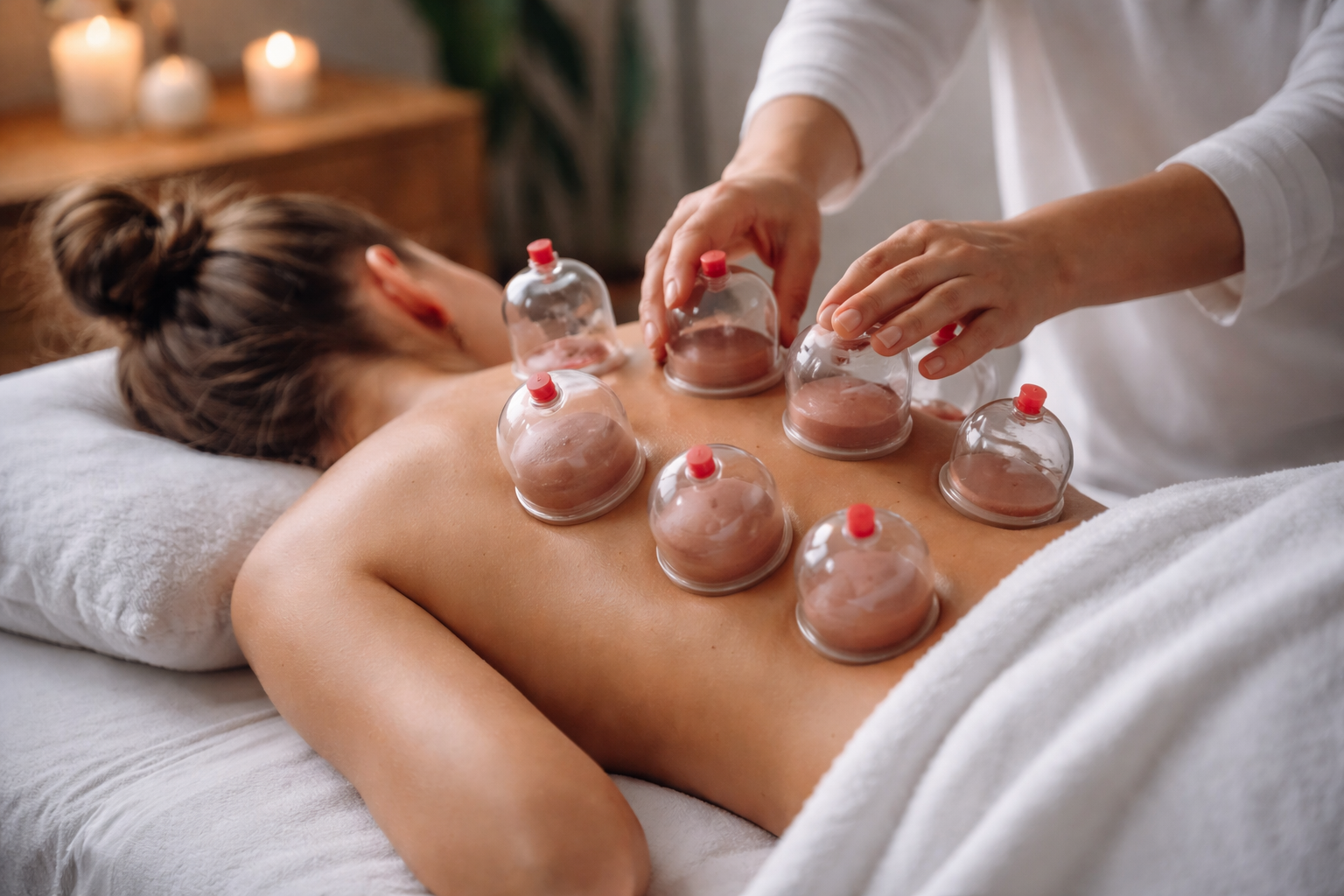
Cupping therapy works by creating gentle suction on the skin. This lifts the tissue, increases circulation, and helps release deep muscle tension.
Unlike treatments that only work on the surface, cupping allows the body to open up areas that are holding tightness and restriction.
This can help:
Many clients describe the feeling as a deep release rather than pressure. It allows the body to let go of tension it has been holding onto for a long time.
One of the most common frustrations people have is that tension keeps returning.
This is because stress is not only physical. It is also influenced by lifestyle, posture, and ongoing mental pressure.
When the body repeatedly experiences stress, it learns to hold tension more easily.
This is why regular treatments, combined with simple daily habits, can make a significant difference over time.
Releasing tension is not about one quick fix. It is about helping the body return to a more natural, relaxed state.
Alongside cupping therapy, simple changes can support this process:
When combined with treatment, these habits help prevent tension from building again.
Cupping therapy can be used in different ways depending on your needs.
Some people come for relief from specific issues such as back pain or tight shoulders. Others use it as part of a regular routine to maintain mobility and reduce stress.
Sessions are tailored to your body, ensuring treatment is both effective and comfortable.
When tension is understood as a physical response, it becomes easier to address. Your body is not working against you. It is responding to the demands placed on it.
With the right support, your body can release tension, improve movement, and feel more comfortable day to day.
Cupping therapy offers a natural and effective way to help your body reset, recover, and restore balance.
If you are experiencing ongoing tension, discomfort, or tightness in your body, cupping therapy can help you feel more relaxed and supported.
Gareth Amos provides professional cupping therapy in Stockport, Greater Manchester, and Cheshire, offering tailored treatments designed around your body and your needs.
To book a session or learn more:
Visit www.garethamos.com
Call 07990586599
Appointment
Evidence based hypnotherapy for calm, confidence, and positive change in Stockport and Cheshire. Supporting anxiety, IBS, sleep, phobias, confidence, pain relief, public speaking, smoking, weight loss, depression, and more.
Also offering cupping therapy, lymphatic drainage massage, Indian head massage, and Reiki healing.
If you are based outside Stockport, you can also explore hypnotherapy services in Manchester or across Cheshire.

Copyright © 2025. All Rights Reserved